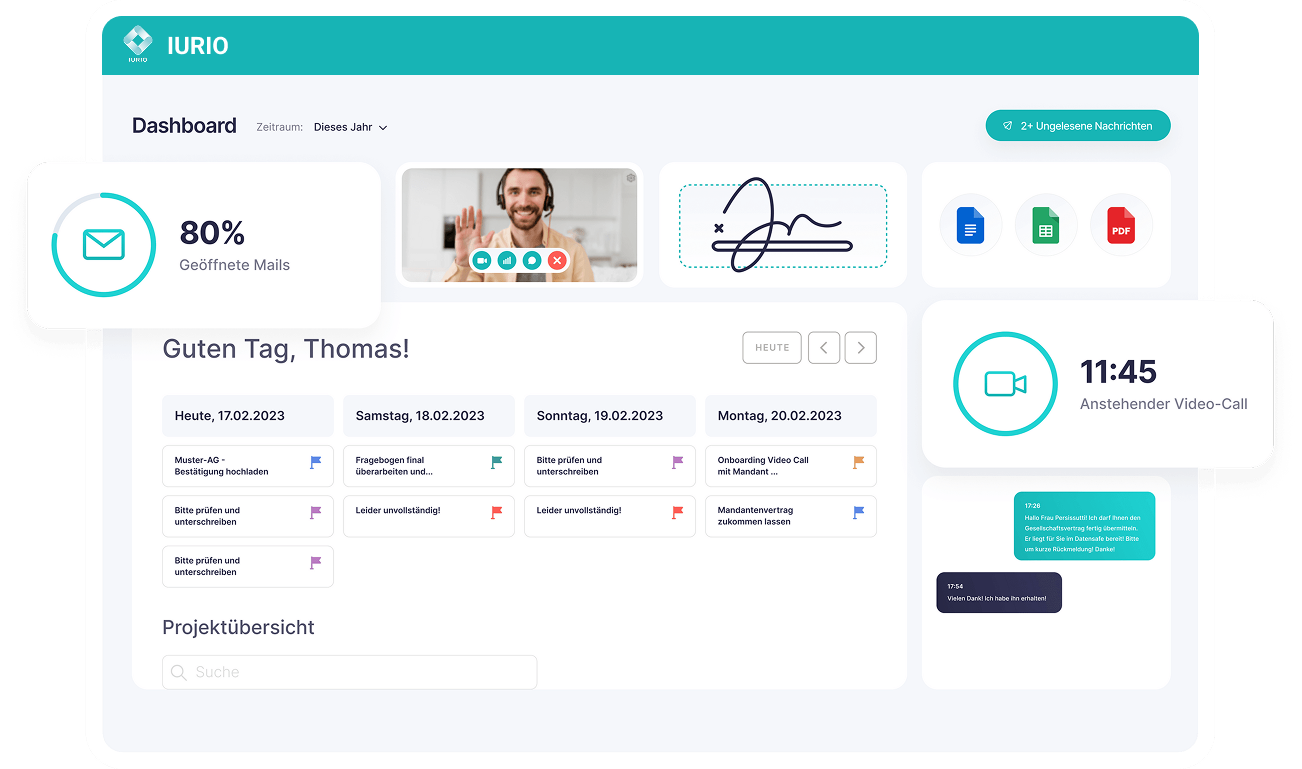
Working from home, digital collaboration, remote management, advising clients via video chat: law firms have had to reorganize themselves overnight due to the pandemic. The demands have never been greater, but at the same time, so have the opportunities and potential.
The report "#Future law firm reloaded" looks at the challenges and opportunities in 2022 and describes what the law firm of the future will look like. We took a look at the report and summarized the most important facts for you.
Even before the pandemic, the challenges facing the industry were manifold: a shortage of skilled workers, digital transformation, automation and changing values and norms were shaping the new world of work. Law firms became systemically relevant during and as a result of the pandemic and clearly felt the economic consequences of the virus.
The law firm sector, which is often still analog, first wanted to get to grips with the digital transformation, but there has been no time for this in the past two years. That is why it is now time to act, react to the current circumstances and seize opportunities. Because one thing is certain: digitalization is here to stay.
"Anyone who is not open to change will ultimately need pressure from outside - and that will come."
-Sarah Klinkhammer, tax assistant and digitalization manager at Dortmund-based tax consultancy Dieckhöfer & Partner.
Collaboration instead of Lone Wolf
In the 21st century, the entire world is globally networked. We exchange information via messenger services and communicate via web platforms. Whether by telephone, video calls or online meetings: the call for simple but efficient digital communication is getting louder and louder. It is particularly important for law firms to work collaboratively. Networking law firms with other law firms, clients, specialists and partners is of great importance to 92% of respondents.
Many law firms are still lagging behind their goals when it comes to implementing their networking plans. Yet there are already collaboration platforms on the market that allow teams, law firms and clients to communicate, work together and share information on a single platform.
Digital collaboration is essential for the law firm of the future: with a cloud-based platform, you can securely exchange information and data, manage projects and documents and communicate with your clients and employees.
Trust as the key to success
The be-all and end-all of any law firm is - and always will be - client service. For around 86% of those surveyed, virtual consulting also plays a central role. Tax advisors will change from reactive service providers to active, personal, holistic advisors. New technologies can also be used to provide advice. This will change relationships with clients and job profiles in law firms, but change is not a negative thing.
It is important to create an environment in which customers feel comfortable. Keyword: trust and security! Small businesses must rely on highly secure and encrypted software that allows them to upload, process and exchange sensitive data in compliance with data protection regulations. Emails are out, smart collaboration and communication tools are in!
"I use digitalization to simplify and optimize processes for the benefit of consulting."
- Henning Blank, self-employed tax consultant and auditor and board member of the North Baden Chamber of Tax Consultants.
Using resources sensibly
Anyone who says "you don't talk about money" is wrong. So now we come to the last point, which is a driving force for everyone involved: money. It's not a question of where you can save money, but where you can save time. Because time is the real currency. Digital processes and shortened work paths help law firms in their day-to-day business to avoid going the unnecessary extra mile and instead use the resources gained sensibly and effectively.
95% of respondents say that setting up a central data structure is an important issue in order to work efficiently and save resources. Extensive digitalization of the law firm sector is necessary and the next step towards the future. Print documents are digitized with the help of software tools and in so-called collaboration suites you can track the productivity and performance of your employees and analyze where you are losing time and money.
The future of law firms
As mentioned at the beginning, it often takes drastic events for something to change. The past two years have been formative for the entire industry and its employees. But could the timing be better?
Digitalization has come faster than expected and presents us with major challenges, but now is the time to seize the opportunities. So how can you also become the law firm of the future and help shape the future of law firms at the same time?
Find out what needs your law firm and your employees have and evaluate where you want to start. Test different tools and finally decide on the one that you feel comfortable with and that brings you the greatest cost-benefit advantage.Don't see change as a threat, but instead be a pioneer and thought leader and actively help shape the future.